
By Patrick B. Balahan
When Donald Trump first suggested the United States should acquire Greenland, most people reacted exactly as expected: with laughter. The idea sounded absurd, cartoonish, almost deliberately provocative. Buying an island. Purchasing a country. It was filed away as another Trump eccentricity, a headline designed to dominate the news cycle for a few days and then disappear.
But that reaction misses something important. Trump rarely floats ideas that don’t serve a deeper purpose. The theatrics are real, but they are not the point. The point is leverage.
If you look at Greenland not as a frozen landmass but as an asset in waiting, the idea stops sounding ridiculous and starts sounding very Trump. And if you look at Trump not as a conventional statesman but as a dealmaker whose real skill has always been monetizing proximity to power, the picture becomes clearer still.
This isn’t about patriotism. It isn’t about territorial expansion in the old imperial sense. And it certainly isn’t about helping Greenlanders. Trump’s interest in Greenland makes the most sense when you understand it as a positioning move, one that could benefit him personally, financially, and reputationally for decades to come.
Trump has never made most of his money by operating businesses well. He has made it by standing adjacent to value as it emerges. Branding instead of building. Licensing instead of managing. Owning attention instead of assets. He doesn’t need to extract oil, mine minerals, or run ports. He needs to be associated with the moment a place becomes important.
Greenland is one of those places.
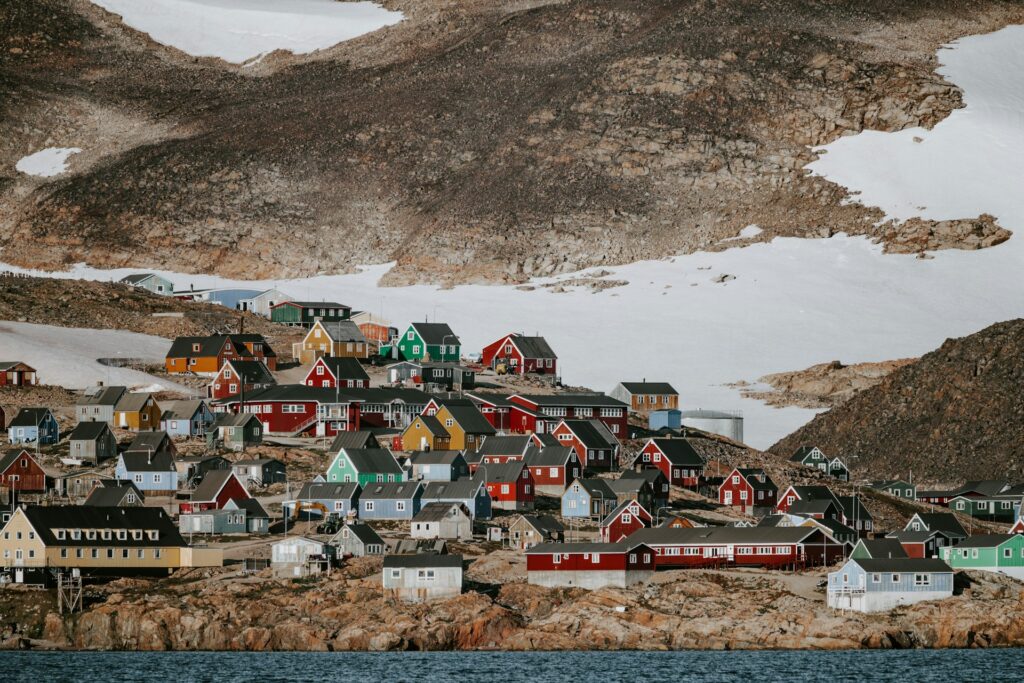
For most of modern history, Greenland has been geopolitically marginal, important enough for military basing, but remote, underdeveloped, and politically delicate. That is now changing. Arctic routes are becoming more navigable. Missile trajectories increasingly pass over the polar region. Space surveillance, early-warning radar, and missile defense systems all rely on northern geography. Critical minerals needed for advanced defense and energy systems are becoming scarcer and more politicized.
In short, Greenland is moving from peripheral to strategic.
Trump understands something that many policymakers prefer not to say out loud: the moment a place is declared “strategic,” money follows. Not immediately, not recklessly but inevitably. Defense contractors, logistics firms, infrastructure developers, shipping interests, mining consortia, sovereign funds. Capital does not like uncertainty, but it loves inevitability. Label a place inevitable, and investors will line up quietly behind the scenes.
Trump’s intervention accelerates that process.
By forcing Greenland into the global conversation, not as a curiosity but as a prize, Trump helps reprice it in the minds of institutions that matter. He doesn’t need the acquisition to succeed for that repricing to occur. The attempt alone does the work.
This is where the personal benefit begins.
Trump has always understood that influence is most valuable when it can be rented rather than owned. If Greenland becomes central to Arctic security, defense infrastructure, or future supply chains, the person most associated with that pivot gains something immensely valuable: gatekeeping power. Not formal authority, but informal control over access. Who gets credibility. Who gets an introduction. Who gets taken seriously.
That kind of influence converts cleanly into money without ever looking like a transaction.
Advisory roles, strategic consulting, paid introductions, and boards and partnerships that exist just far enough from direct policy to remain legal and defensible. This is not corruption; it’s how global elites operate in plain sight. Trump has done versions of this his entire career.
The key is being early.
Trump doesn’t want to profit from Greenland as it exists today. He wants to profit from Greenland once it becomes unavoidable. And by positioning himself as the first major figure willing to frame Greenland as a core strategic asset, he ensures that if and when that happens, his name is already attached to the story.
That attachment is valuable.
There is also a more subtle layer to this: regulation. Trump has always understood that rules are more powerful than assets. Whoever shapes the initial regulatory framework, around environmental exceptions, security carve-outs, mineral licensing, infrastructure permissions, effectively decides who wins later. Even indirect influence over that process creates enormous downstream value.
You don’t need to own a mine if you helped create the conditions under which certain mines become viable and others don’t.
You don’t need to operate a port if you helped define which ports receive security clearance or funding priority.
Trump’s Greenland push is a way to insert himself into the pre-regulatory phase of an emerging strategic market. That is where leverage is cheapest and returns are highest.
Then there is the reputational dividend.
Trump’s post-presidency income depends on relevance. Speaking fees, media leverage, consulting, donor influence, none of it works if he fades into the background. Greenland gives him a narrative that does not expire. As Arctic security and infrastructure become more prominent over the next twenty or thirty years, Trump can always say, “I was right. I said this mattered before anyone else would admit it.”
Foresight, or even the perception of foresight, is a monetizable asset.
This is not about immediate enrichment. It is about building a long-term revenue engine based on credibility, controversy, and indispensability. Trump has never been interested in quiet wealth. He is interested in power that can be converted into money over time.
Greenland offers exactly that.
What makes this strategy particularly Trumpian is that it doesn’t require success in the conventional sense. He doesn’t need Congress to approve a purchase. He doesn’t need Denmark to agree. He doesn’t even need formal control. He only needs Greenland to move permanently from “ignored” to “essential.”
Once that happens, being the man who forced the conversation becomes its own form of ownership.
This is also why the idea feels unsettling. It blurs the line between national interest and personal incentive without technically crossing it. It operates in the gray zone where policy, capital, and ego overlap. And it reflects a broader truth about modern power: territory matters less than control over narratives, rules, and access.
Trump understands that the future is not owned by those who govern it, but by those who positioned themselves correctly before it arrived.
Greenland is not a country he wants to buy.
It is a future he wants to stand in front of.
And if that future unfolds the way current trends suggest, standing in front of it may turn out to be one of the most profitable positions he has ever taken.