
By Patrick B. Balahan
There is a recurring belief in global policy circles that a durable agreement with Iran is ultimately achievable. Each cycle of negotiations brings renewed optimism that diplomacy, incentives, or economic pressure might produce a stable and lasting outcome.
However, this expectation rests on a flawed assumption. It overlooks two structural forces that are far more powerful than any negotiated agreement: geography and ideology. These forces do not shift with election cycles or diplomatic efforts, and together they make long-term stability unlikely.
As a result, the Strait of Hormuz will continue to function as a persistent source of geopolitical leverage, keeping energy markets under pressure and contributing to sustained constraints on global economic growth.
Geography Creates Permanent Leverage
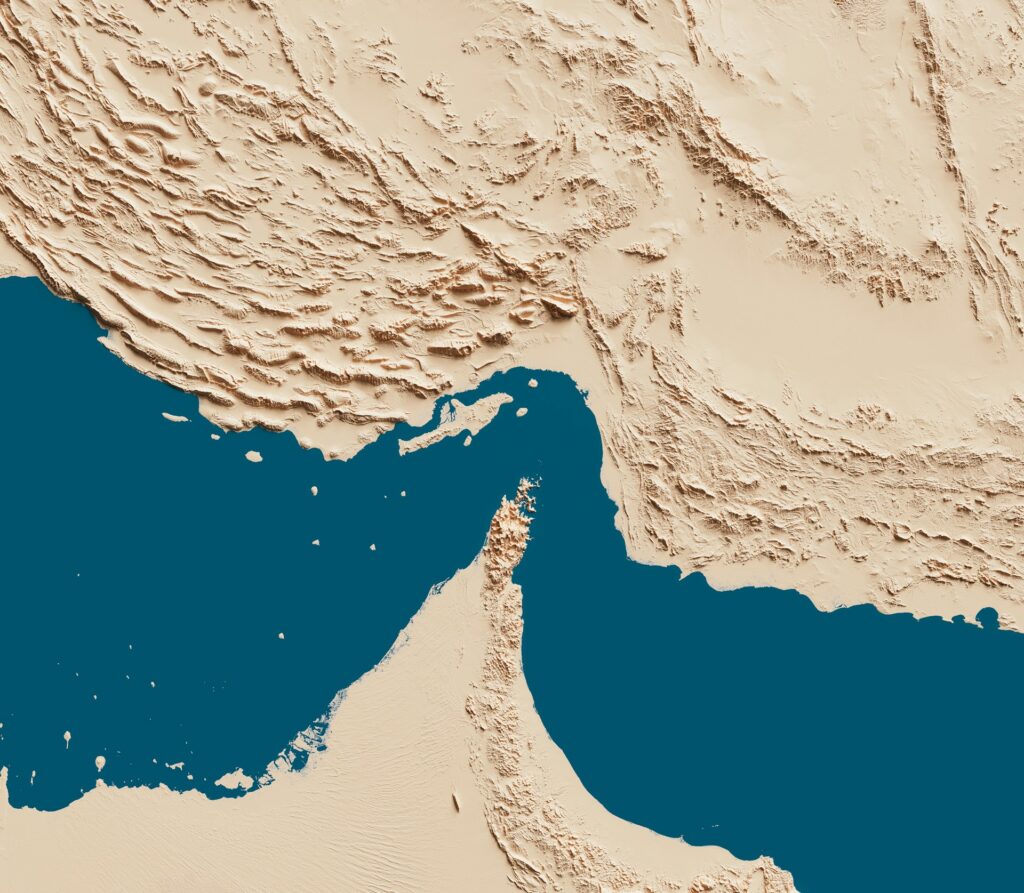
The Strait of Hormuz is one of the most critical chokepoints in the global economy. Approximately one-fifth of the world’s oil supply passes through this narrow waterway each day, making it indispensable to global energy distribution.
Despite ongoing investments in alternative routes, there is no viable replacement capable of handling comparable volumes in the short or medium term. Pipeline infrastructure across the region can offset only a fraction of the total flow. This creates a structural dependency on the Strait that cannot easily be reduced.
Iran’s geographic position is central to this reality. The country borders the northern side of the Strait, placing it in direct proximity to one of the most important transit corridors in the world. This proximity provides Iran with a form of asymmetric leverage. It does not require full control over the Strait to influence global markets; it only needs to create credible uncertainty around its security.
In energy markets, perceived risk is often as consequential as actual disruption. Even limited incidents or threats can lead to immediate price increases, as market participants adjust for potential supply constraints.
This dynamic ensures that the Strait of Hormuz remains not only a physical passage for oil, but also a strategic pressure point embedded within the global economic system.
Ideology Reinforces Strategic Behavior
While geography explains Iran’s capacity to exert influence, ideology helps explain its willingness to do so.
Iran’s strategic posture has been shaped over decades by a focus on sovereignty, regional influence, and resistance to external pressure, particularly from Western powers. This orientation is not temporary, nor is it purely reactive. It is embedded within the country’s political and institutional framework.
Economic considerations are important, but they are not the sole driver of decision-making. Iran has demonstrated a consistent willingness to absorb economic costs, including sanctions and reduced trade integration, in order to maintain strategic autonomy.
Within this context, the Strait of Hormuz serves as a critical asset. It offers Iran a means of exerting influence beyond its conventional economic capacity. By maintaining the ability to disrupt or threaten this corridor, Iran retains a form of leverage that extends into global markets.
From a strategic perspective, controlled instability can serve a purpose. It reinforces Iran’s relevance in international negotiations and ensures that external actors must account for its position when shaping policy.
Why Lasting Agreements Remain Elusive
Diplomatic agreements rely on aligned incentives. In the case of Iran, those incentives remain fundamentally misaligned with those of the broader international community.
Many global actors prioritize stability, predictability, and the uninterrupted flow of energy. Iran, by contrast, derives strategic value from maintaining a degree of uncertainty. This does not imply a desire for constant disruption, but rather a preference for preserving leverage.
As a result, agreements tend to function as temporary stabilizers rather than permanent solutions. They can reduce tensions in the short term, but they do not address the underlying structural dynamics.
Over time, shifts in policy, regional developments, or external pressure often reintroduce instability. The cycle then repeats, reinforcing the perception that agreements are inherently fragile.
This pattern is not accidental. It reflects the persistence of the underlying incentives that shape behavior on all sides.
Energy Markets and the Cost of Uncertainty
The global oil market is highly sensitive to risk, particularly when that risk is concentrated in a critical chokepoint such as the Strait of Hormuz.
It is not necessary for the Strait to be fully closed in order to affect prices. The mere possibility of disruption can lead to significant market reactions. Traders and policymakers must account for potential supply shocks, and this precaution is reflected in pricing.
Over time, this creates a structural risk premium in oil markets. Prices remain elevated not only because of current supply conditions, but also because of the persistent possibility of future disruption.
This dynamic contributes to ongoing volatility and limits the extent to which prices can stabilize at lower levels. Even during periods of relative calm, the underlying risk does not disappear.
Implications for Gas Prices and Consumers
For consumers, the impact of this structural risk is most visible in the form of higher and more volatile fuel prices.
As oil prices increase or fluctuate, the effects are transmitted through refining, distribution, and retail systems. This results in higher gasoline prices and greater variability over time.
These changes are not solely driven by immediate supply disruptions. They are also shaped by expectations, risk assessments, and broader market dynamics linked to geopolitical conditions.
In this sense, consumers are indirectly exposed to the strategic realities of the Strait of Hormuz, even if they are geographically distant from it.
A Persistent Constraint on Global Growth
Energy costs are a foundational component of economic activity. When they rise, the effects extend across multiple sectors, including transportation, manufacturing, and agriculture.
Sustained increases in energy prices tend to produce several macroeconomic consequences:
- Higher operating costs for businesses
- Reduced consumer purchasing power
- Increased inflationary pressure
- Tighter monetary policy in response to inflation
These effects collectively contribute to slower economic growth over time.
The impact is particularly pronounced in countries that rely heavily on imported energy. Many economies in Asia and Europe fall into this category, making them especially sensitive to disruptions in the Strait of Hormuz.
While energy-exporting countries may benefit from higher prices in the short term, they are not immune to the broader effects of volatility and uncertainty.
Structural Dependence and Limited Alternatives
One of the most significant challenges facing the global energy system is the lack of scalable alternatives to the Strait of Hormuz.
Although efforts have been made to diversify supply routes and invest in alternative energy sources, these transitions require time and substantial capital. In the near term, the global economy remains heavily dependent on existing infrastructure.
This dependence creates a form of structural vulnerability. A single geographic chokepoint continues to influence a large share of global energy flows, and by extension, global economic stability.
Until this dependency is meaningfully reduced, the strategic importance of the Strait will remain unchanged.
Conclusion
The expectation of a lasting and stabilizing agreement with Iran does not adequately account for the structural realities at play. Geography provides Iran with enduring leverage, while ideology shapes how that leverage is used.
As long as these factors remain in place, the Strait of Hormuz will continue to function as a critical point of tension within the global economy.
This does not imply constant crisis, but it does suggest a persistent state of uncertainty. Energy markets will continue to reflect this uncertainty through elevated prices and ongoing volatility.
In turn, the global economy will absorb the consequences in the form of higher costs and slower growth.
In this context, the question is not whether stability can be achieved permanently, but rather how the world adapts to a system in which instability is an enduring feature rather than a temporary disruption.